
Chased rectangular gold presentation box with crowned diamond-set cipher of King Louis Philippe.
French, 1830-1845.
Length: 3-1/4 inches


Chased rectangular gold presentation box with crowned diamond-set cipher of King Louis Philippe.
French, 1830-1845.
Length: 3-1/4 inches
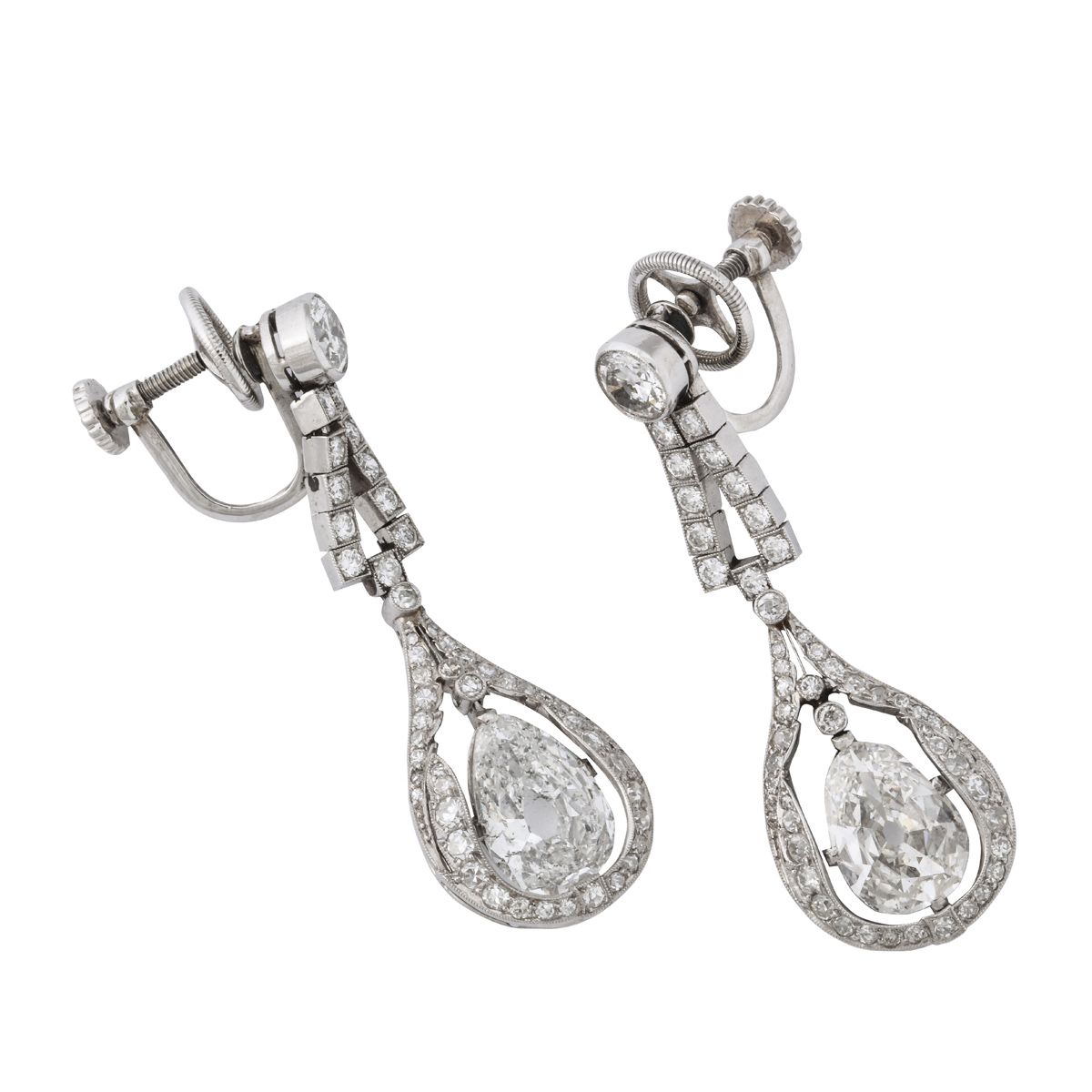
Pair of diamond drop earrings set in platinum, with two pear-shaped diamond drops.
English, ca. 1920.
(approx. 2 cts each pear)
Length: 1 7/8 inches
These earrings appear in our diamond drop earrings video on our videos page.

Natural pearl earrings, in pavé platinum and diamond settings, topped with Asscher-cut diamonds.
English, circa 1910.
Length: 2-1/4 inches
$52,000
These earrings are featured in our diamond drop earrings video on our videos page.

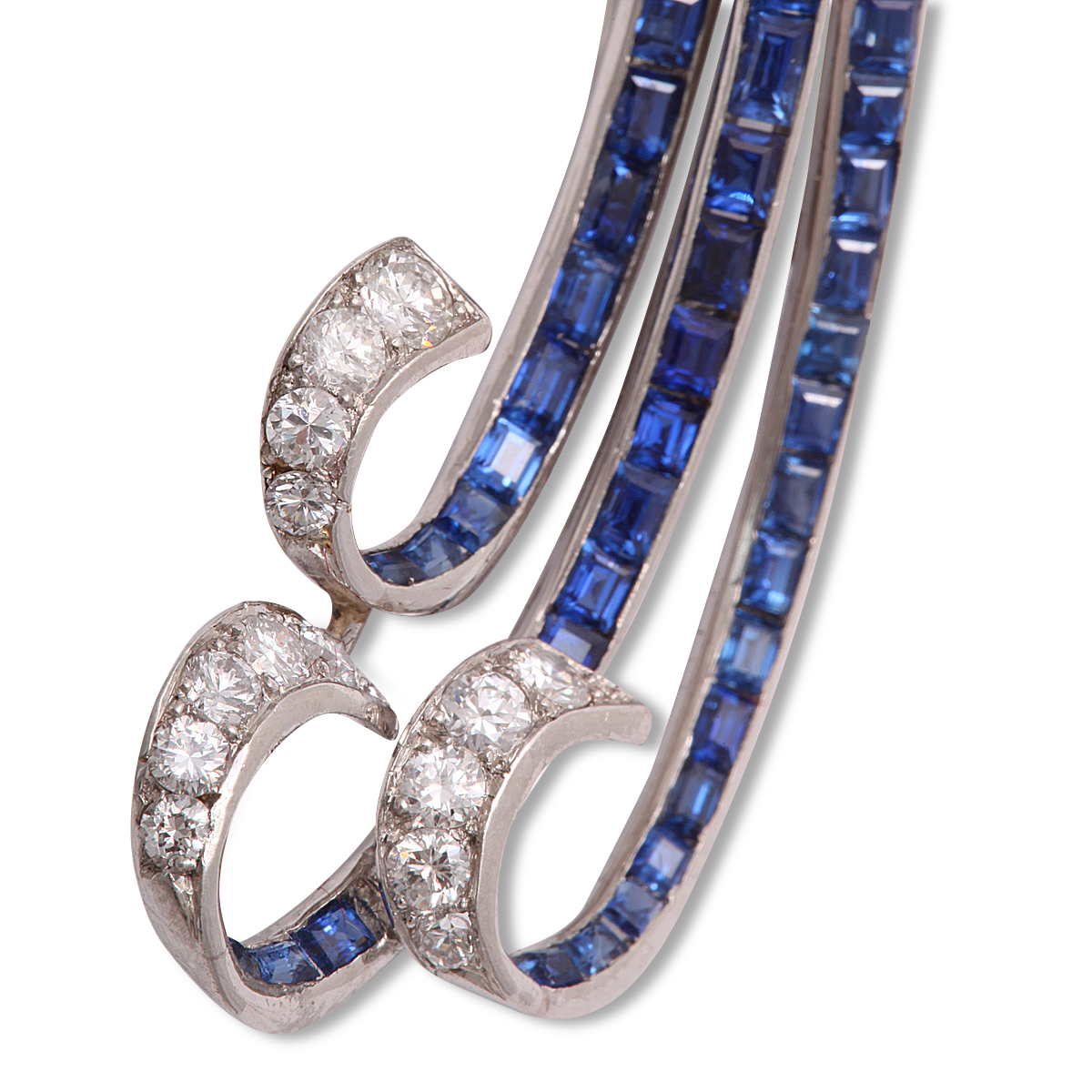
Calibre sapphire and diamond waterfall brooch, set in platinum.
By Paul Flato
American, circa 1935
Length: 2-3/4 inches
$25,000


Antique sapphire and diamond quatrefoil ring.
English, early 20th century
(sapphire approximately 1.6 cts)
$24,000


Black opal and diamond cluster ring mounted in platinum.
English, ca. 1950
(opal approximately 10.4 cts)
$40,000


Gold-mounted malachite and onyx table box.
By Janesich, French, ca. 1920.
Width: 3-3/4 inches
$25,000
This item is available for purchase in the ALVR shop.


 Utilitarian and decorative, cufflinks have an interesting background. For much of history men’s shirt cuffs were hidden beneath outer garments, as their exposure was considered indecent. This began to change in the sixteenth-century when ruffles, the antecedent to the modern cuff, appeared on men’s dress. In the following centuries men began to adorn their wristbands with buttons, but it was the starched cuffs of the mid-nineteenth-century that necessitated an easier fastening solution, heralding the era of the cufflink. In fact, shirts with attached buttons were fairly uncommon, ensuring the widespread use of this accessory
Common among the middle and upper classes from this point onward, cufflinks were a welcome addition to the Victorian gentleman’s rather limited repertoire for sartorial expression. A range of whimsy in cufflink designs allowed a man to show a bit of his personality through common themes like playing cards and sports.
In the mid-nineteenth-century guide The Gentleman’s Book of Etiquette, and Manual of Politeness, author Cecil B. Hartley makes the following recommendation concerning jewelry:
“Let it be distinguished rather by its curiosity than its brilliance. An antique or bit of old jewelry possesses more interest, particularly if you are able to tell its history, than the most splendid production of the goldsmith’s shop.â€
Antique cufflinks provide the gentleman of today with both curiosity and brilliance to enhance his wardrobe, and perhaps, more importantly, a story on his sleeve.
This bracelet features five gold and enamel charms depicting various Ford motorcars, the reverse engraved with each model’s name, dates, and production numbers. The link bracelet is by Tiffany & Co. and the charms are by O. C. Tanner, a Salt Lake City firm established in the 1920s.
While a student at the University of Utah Obert C. Tanner began selling high school and Mormon seminary class pins, soon expanding to include high school awards and club pins. In 1945, the company branched out to include employee recognition awards, a novel idea at the time. Tanner managed to persuade corporate executives to see the benefits of such awards, arguing that ‘recognizing and motivating employees with beautiful, quality emblems would promote better employer/employee relations.’
We have yet to encounter similar bracelets and welcome any commentary. Have you seen anything like it before?
 June 27, 2013 – July 3, 2013
Please visit us at Stand C8.
South Grounds
The Royal Hospital Chelsea
SW3 4SR
London, England
Click here for more information.
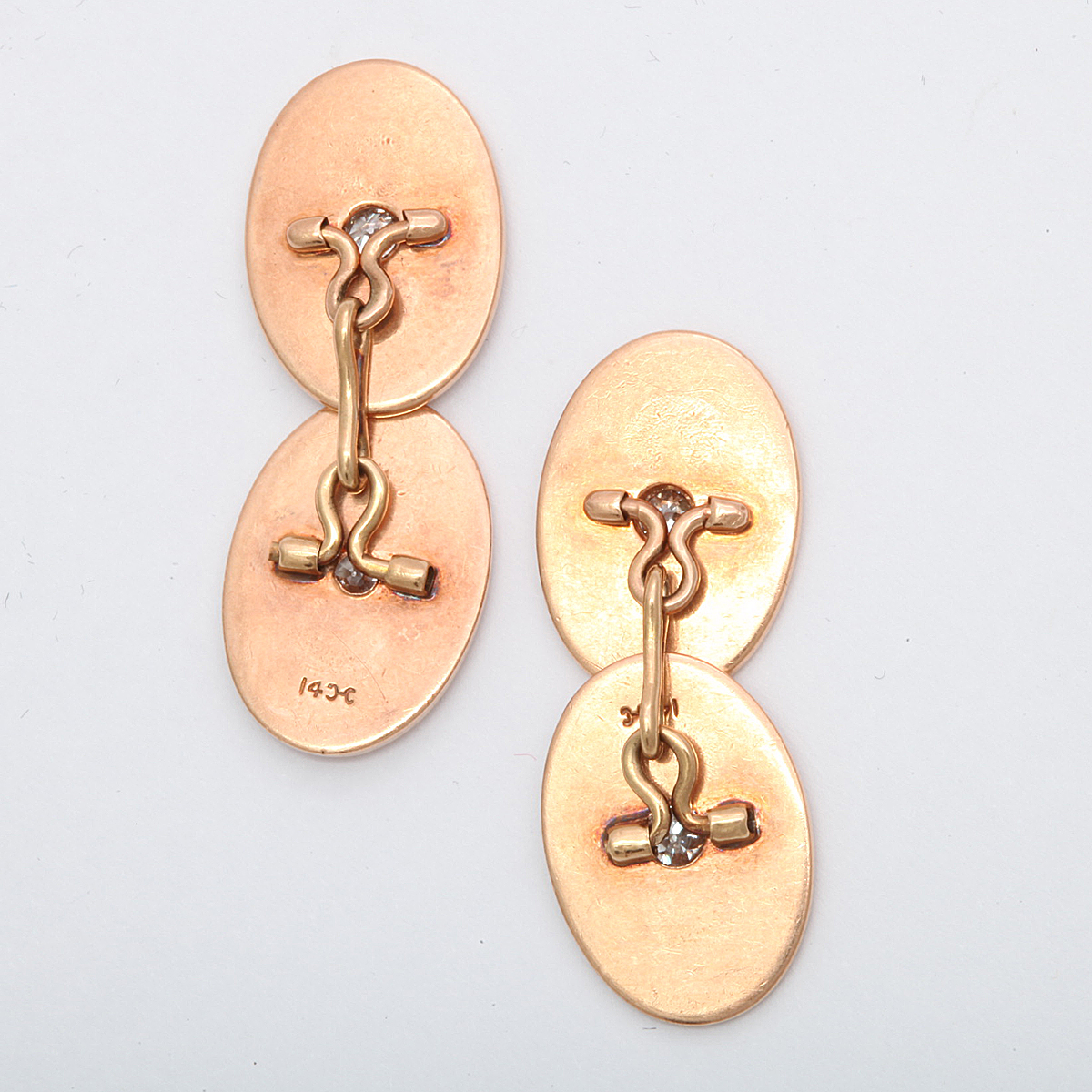
Pair of oval 14k-gold double cufflinks. Each link is set with a old mine diamond.
American, ca. 1900
Height: 3/4 inch
$3,800
Antique Oval Gold Cufflinks – back view
До конца ноÑÐ±Ñ€Ñ Ð² Ðью-Йоркеработает выÑтавка, на которой можно увидеть ÑкÑпонаты чаÑтной коллекции Ñемьи потомÑтвенных ювелиров. Среди них — знаменитые паÑхальные Ñйца Фаберже, которые делалиÑÑŒ по заказу роÑÑийÑкого царÑкого двора.

745 Fifth Avenue, 4th Floor, NYC 10151
1.212.752.1727
Terms of Sale | Terms of Use | Privacy Policy
© A La Vieille Russie | Site by 22.